Workspace Client Functioning and Usage Guide
First Time Configuration
-
Once installation is completed, the Client will be saved in the applications list.
-
Double-click on the application to invoke the client.
-
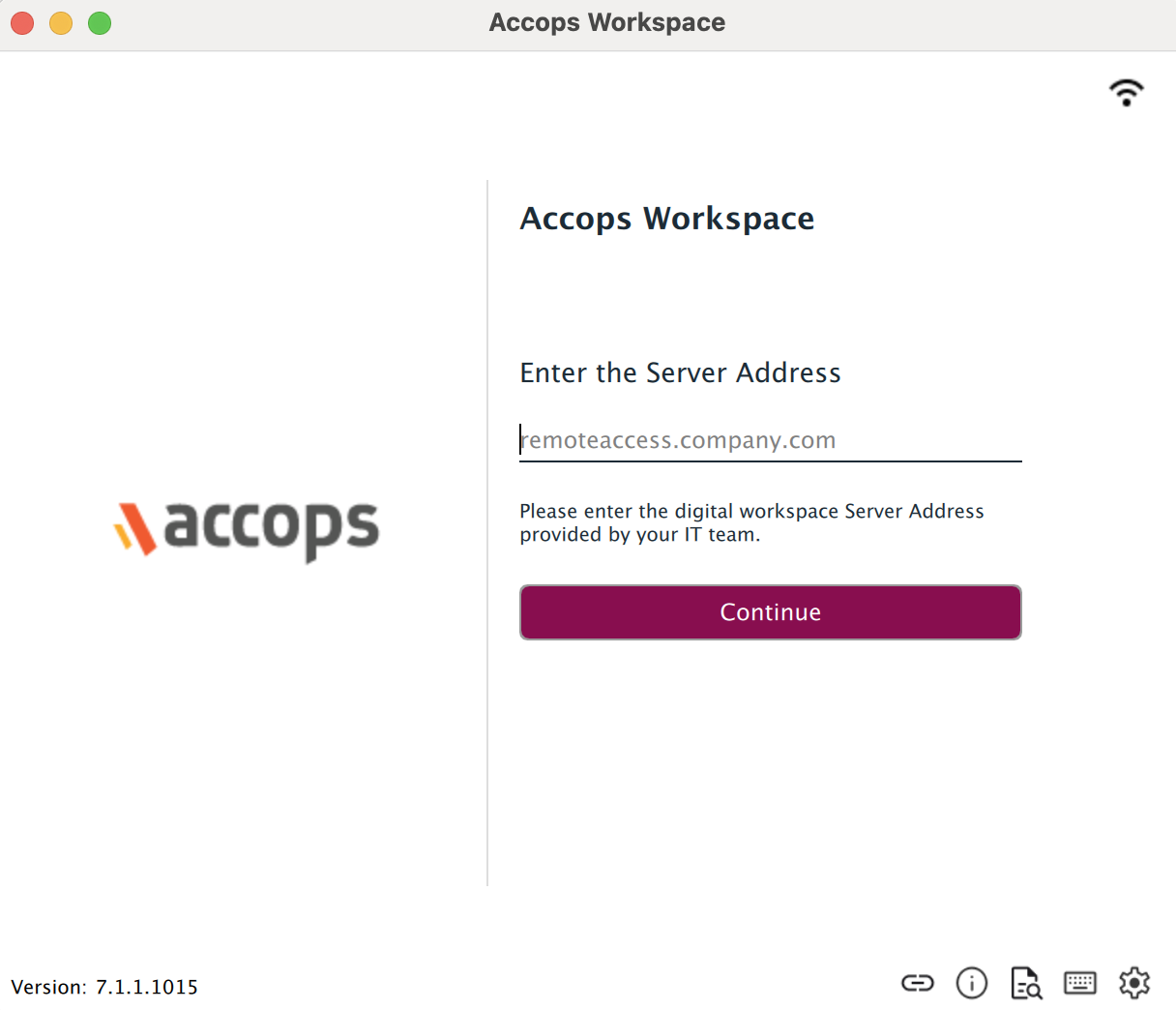
On the first launch, the Workspace Server Address screen will be displayed.
-
In the Workspace Server Address screen, add the appropriate server address click on Connect button.
-
Specify HyWorks Controller Address: if HyWorks Controller and VDI/SHD/Apps are reachable.
-
Requires HyWorks Controller address (IP or Hostname)
-
Port number (Default 38866)
-
-
Specify HySecure Gateway Address: if connection to HyWorks Controller for assigned VDI/SHD/Apps and HySecure Applications can be made via HySecure server.
-
Requires HySecure Gateway address (IP or Hostname)
-
Port number (Default 443)
-
-
-
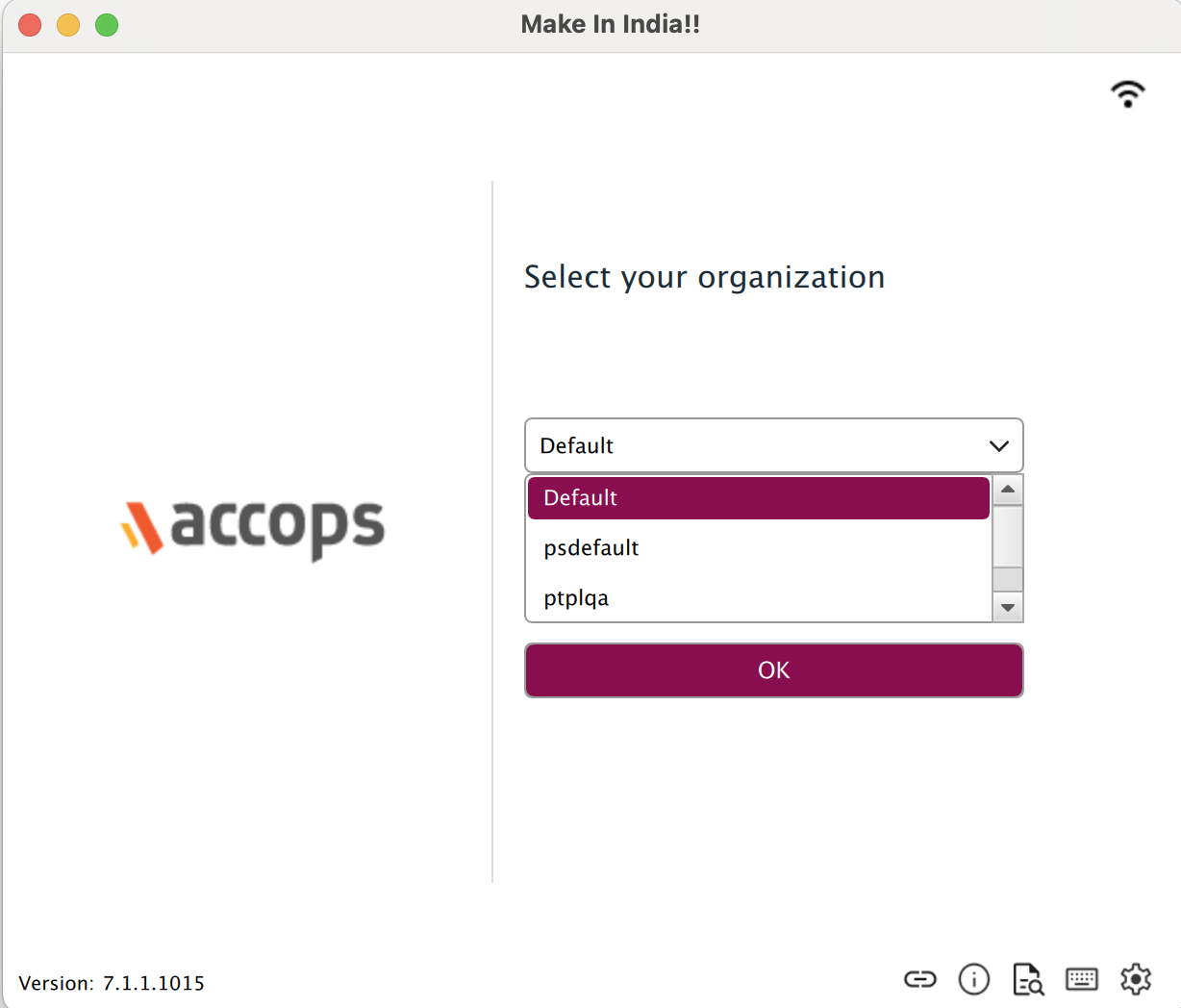
Once connected successfully, the Organization Selection dropdown will be displayed.
Note
If deployment has only a single organization, this screen will be skipped, and the user will be directly navigated to the login screen.
-
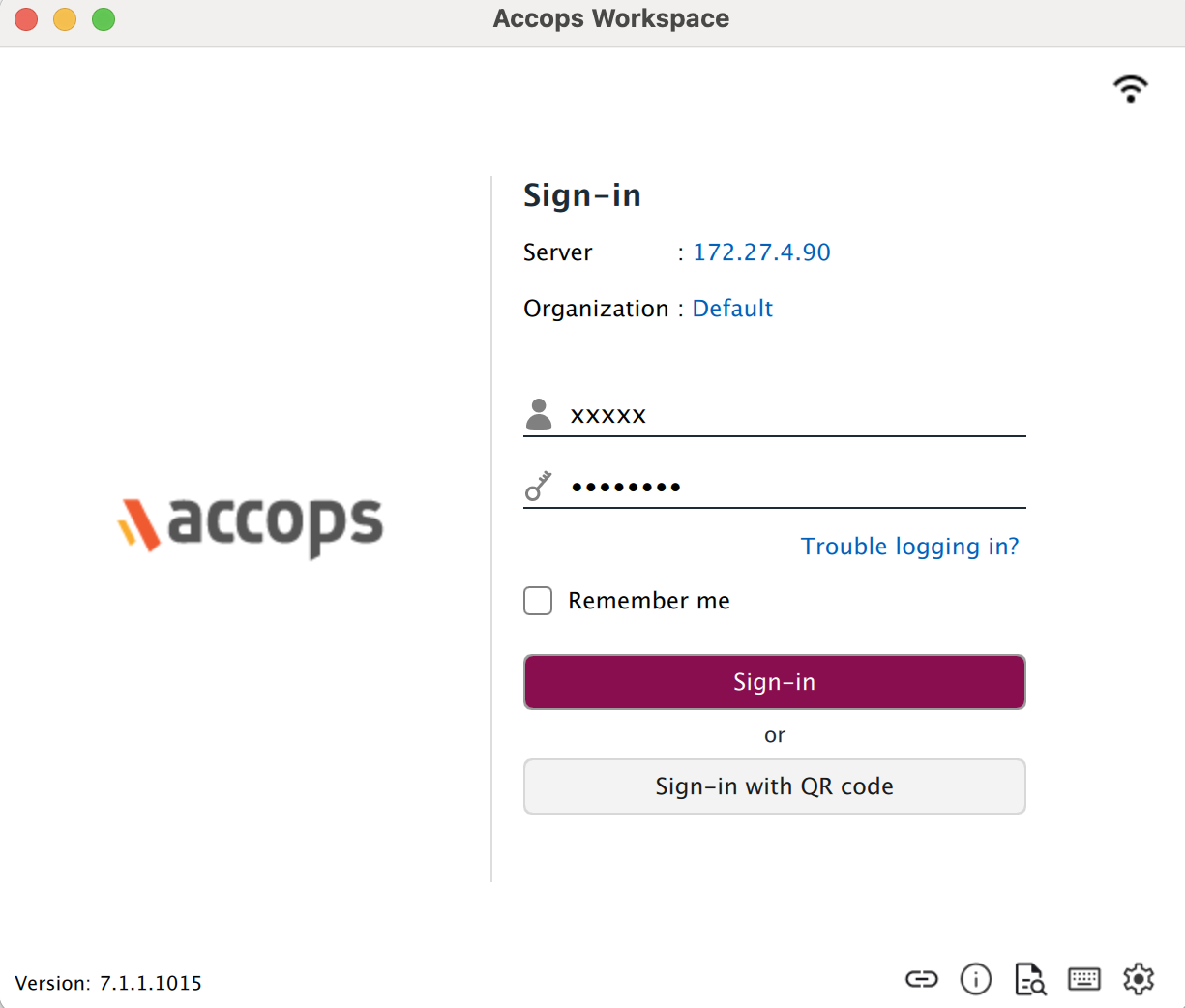
On the Login Screen, provide the appropriate username and password and click on the Sign-in button.
-
Upon clicking on Sign in, it will go to the next page for multifactor authentication if configured with HySecure. An SMS token is required for authentication.

-
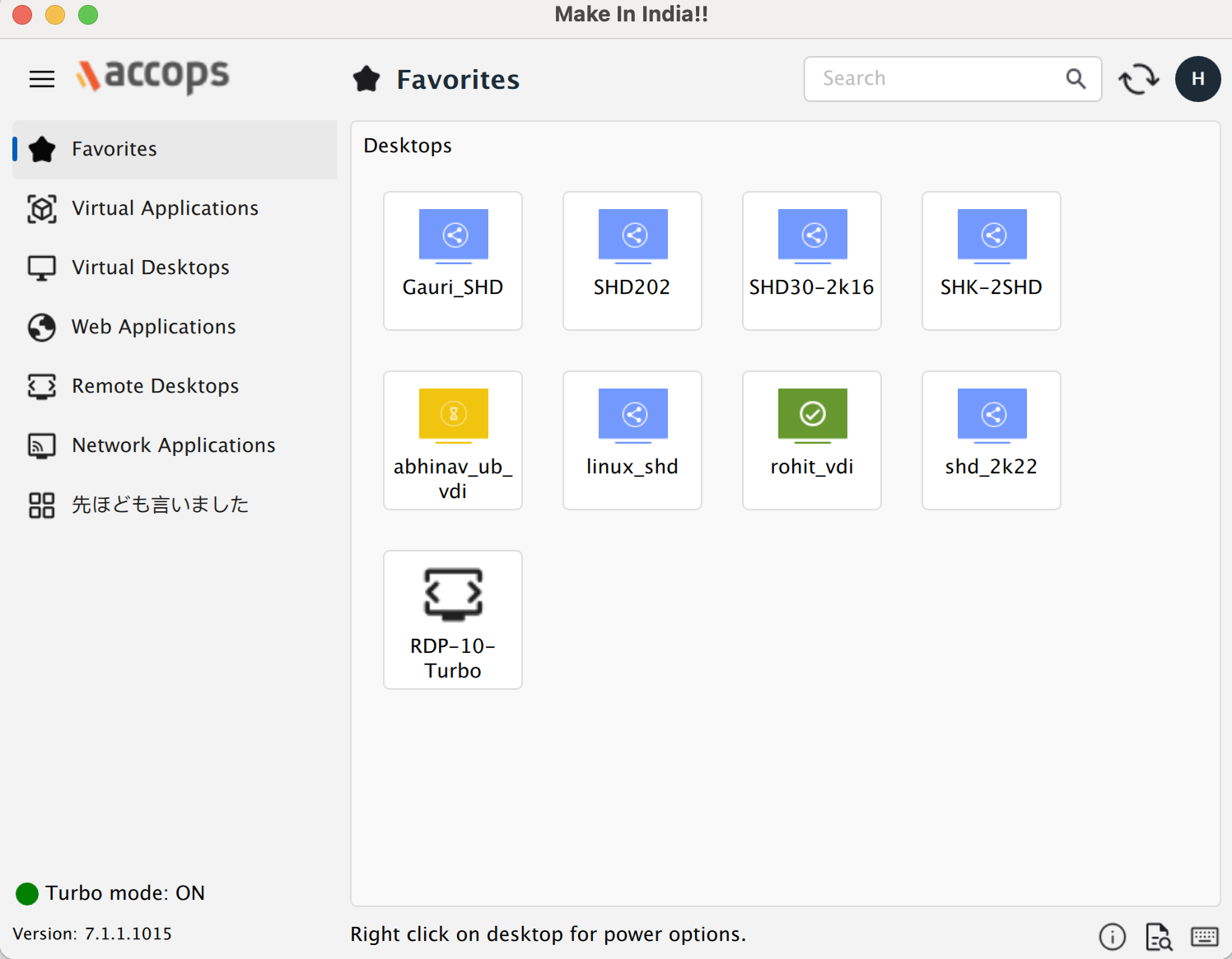
On successful login, the user will be presented with the application tray, displaying the Favorites tab consists of assigned desktops and favorite applications.
-
In the case of a single desktop, a desktop session will be launched automatically, with multiple desktops or applications, an application tray will be displayed, and the user can click on a desktop or application icon to launch it.
Different Types of Controls and Usage
The Workspace login screen contains the following various meaningful controls:
Before Logon
-
Network Status: Displays the status of the network on the system.
-
Organization Selection Link: Clicking on the Organization Name will display a drop-down list of organizations, which can be used to switch the organization.
a. If deployment has only one organization, the option will not be displayed, and the user will log in to the default organization.
b. Changing the organization, unregister the device from one organization, and register the device on the newly selected organization.
- Any device-specific assignments will also be deleted from the previous organization.
c. Once selected, the user’s choice will be remembered, and on the next client launch, the last selected organization will be displayed.
-
Virtual Keyboard: The control is by default hidden and can be made visible from HyWorks Controller Management Console. Navigate to Devices > Device Settings > UI Controls Click on the Virtual Keyboard button to invoke the system default on-screen keyboard.
-
Settings Button: To invoke the Settings screen with multiple user-configurable options. The control can be hidden from the HyWorks Controller Management Console > Endpoints > Device Settings.
The settings Button is not displayed post logon, however, multiple tabs and buttons will be displayed to allow users to configure settings.
-
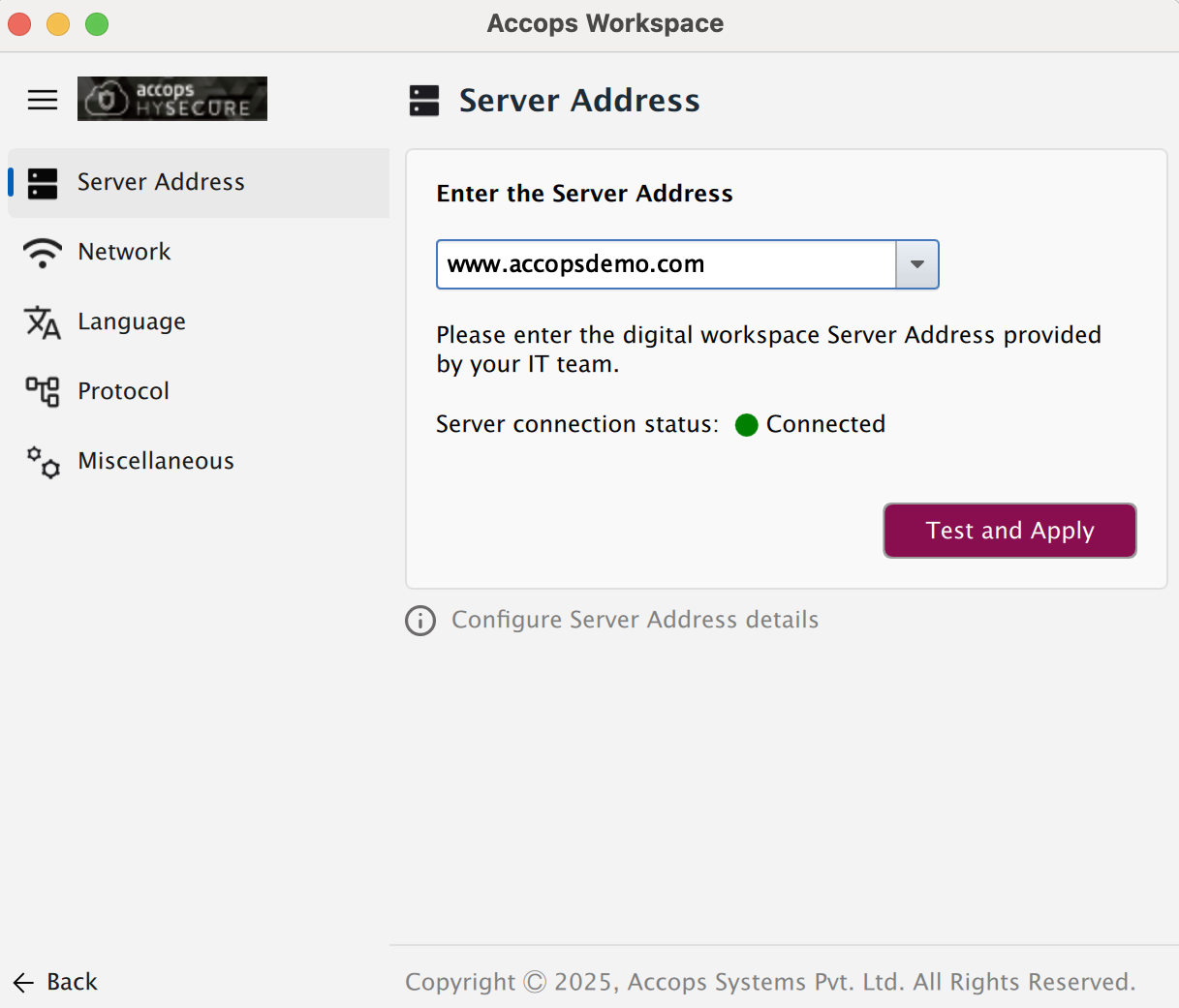
Click on the Settings button, to configure the following:
a. Server Address Configuration: Enter the server address of the HyWorks Controller or the HySecure Gateway.
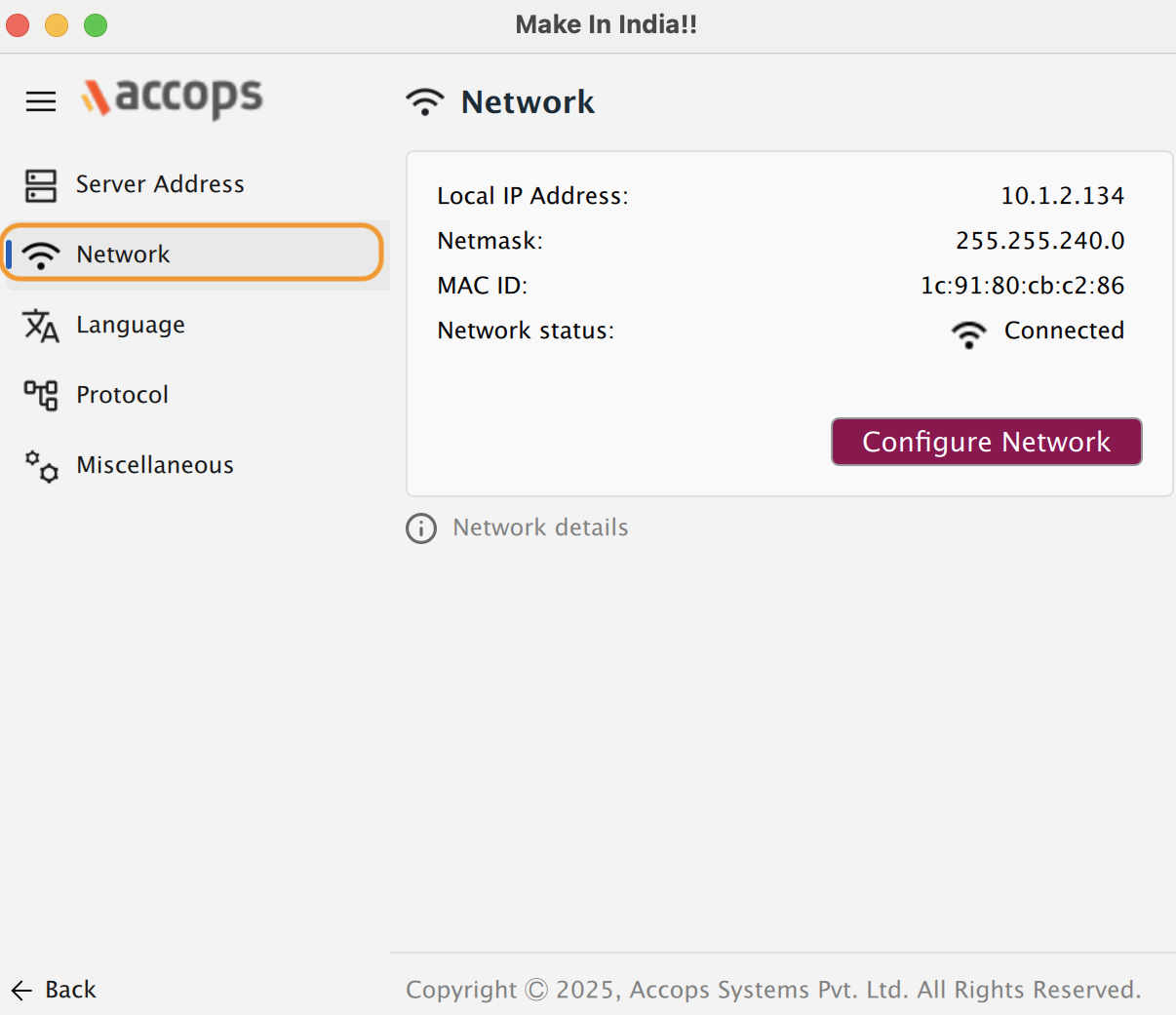
b. Network: To view and check the network status.
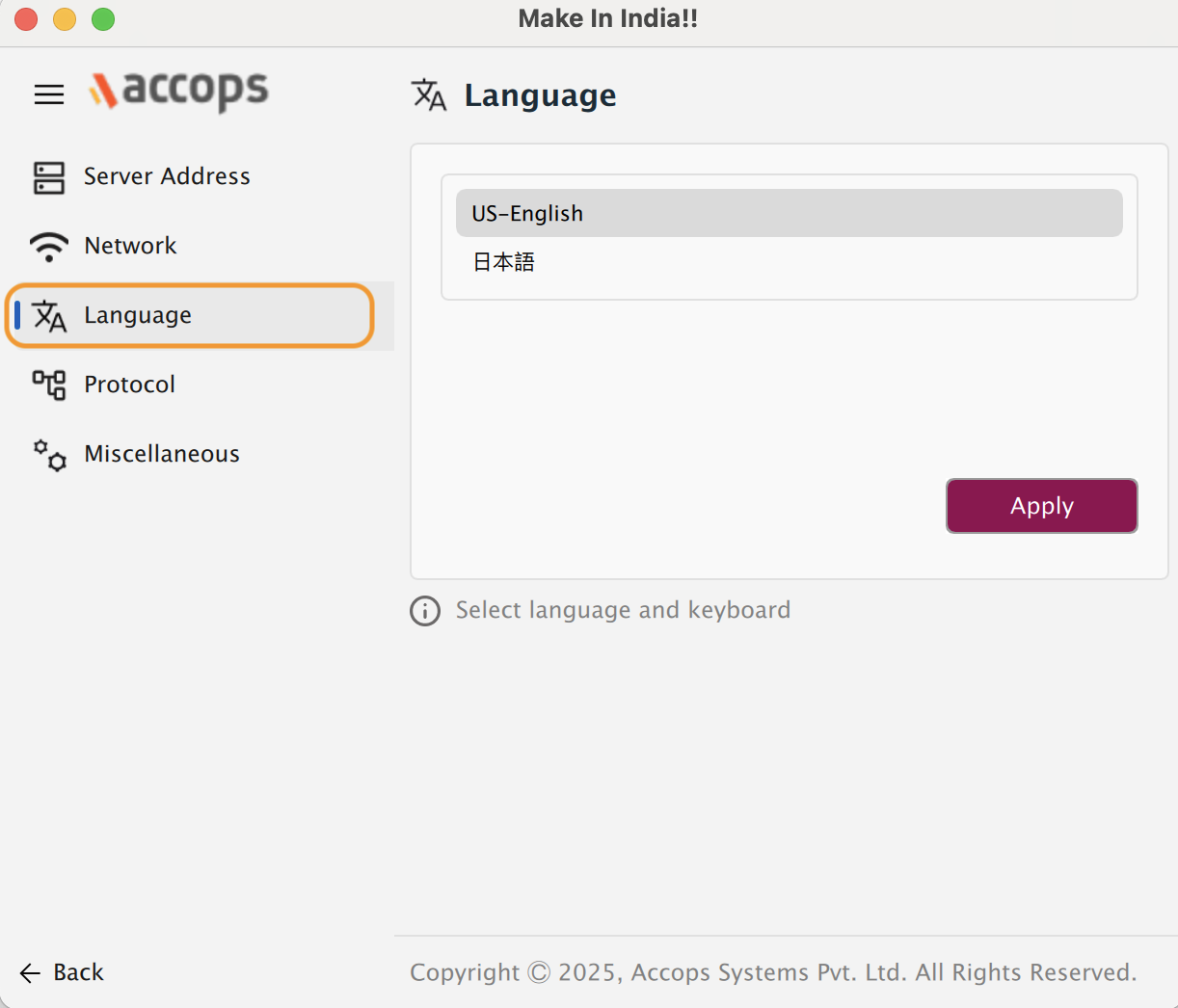
c. Language: Displays the language list fetched from the controller.
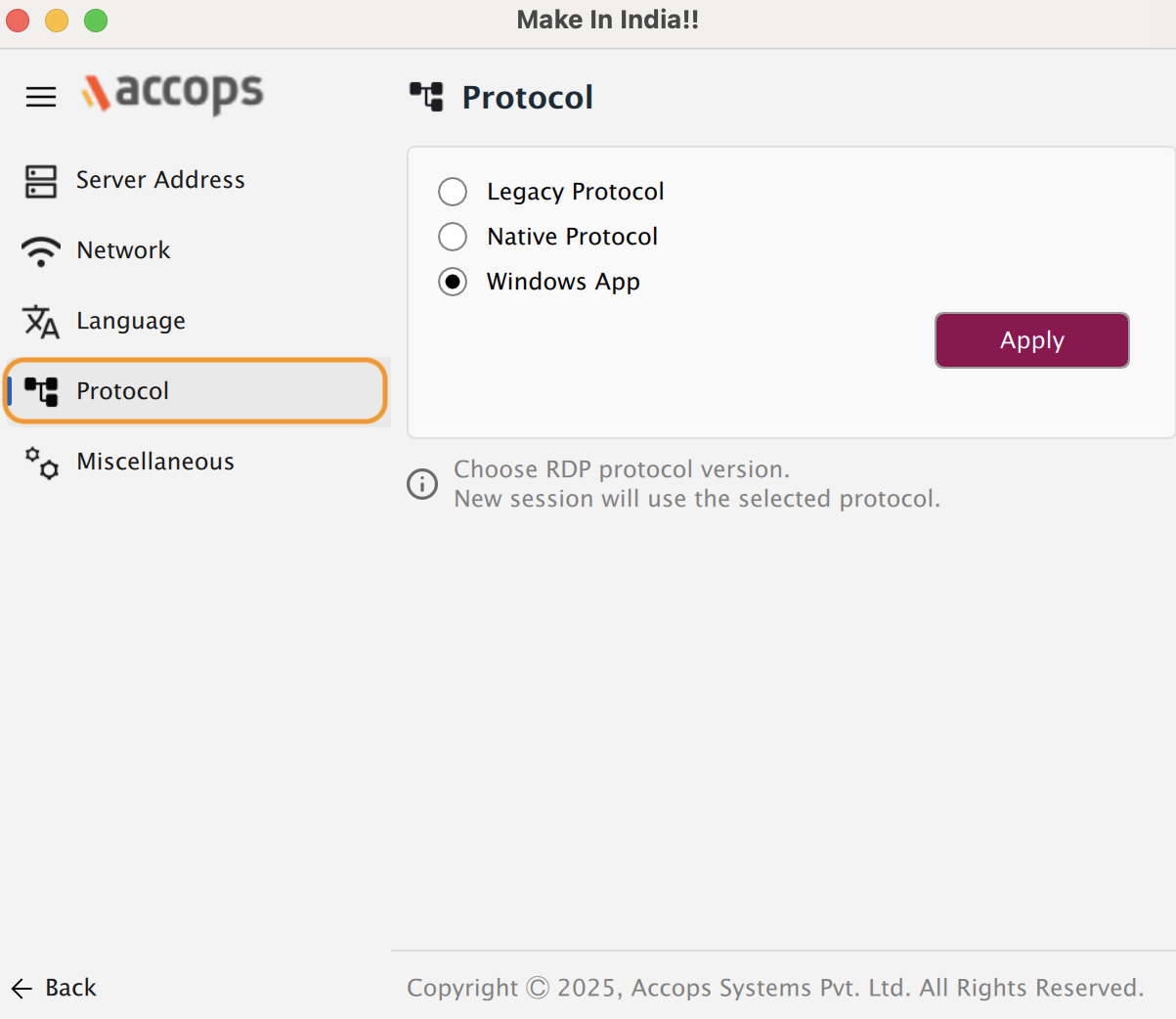
d. Protocol: To select the protocol that will be used to take the session.
-
Workspace mac OS client supports three different protocols:
-
Legacy Protocol
-
Uses the xQuartz framework for launching VDI, SHD, and applications.
-
xQuartz is integrated with the Workspace client; it gets installed along with the client.
-
-
Native protocol
-
This protocol is integrated with the Mac client, and it supports launching VDI and SHD only.
-
Native Protocol does not support remote and shell apps.
-
Limitations of the Native protocol
-
No Support for Remote/Shell App
-
Remote Desktop application will not use the Accops Native protocol even if it is selected instead, it will use the Accops Protocol.
-
No minimize option when the VDI/SHD session is changed to full screen.
-
Launched SHD/VDI is minimized, then the successive launching of SHD/VDI will be minimized.
-
SHD/VDI launches fail when video redirection is enabled from the connection profile.
-
-
-
Windows App (Previously Microsoft Remote Desktop)
- To use Windows App Protocol, Windows App should be pre-installed, and if Windows App is not installed, then click on App Store, which will redirect to the App Store to get Windows App installed.
e. Miscellaneous: Use Compatibility mode
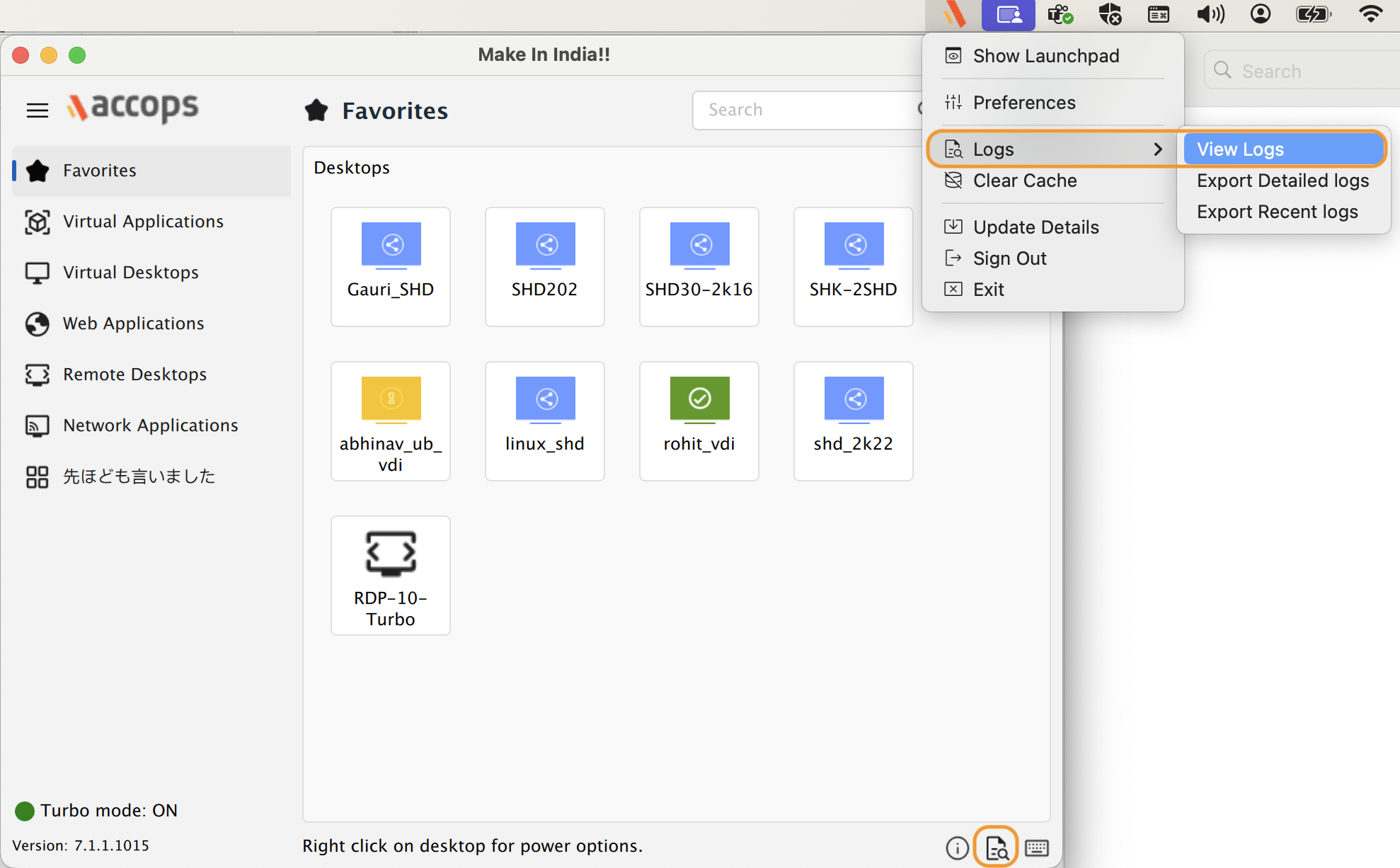
f. View logs from system tray: Client Logs can be opened from the system tray. We have included this feature in the system tray to open the logs while the user is logged in.
-
-
-
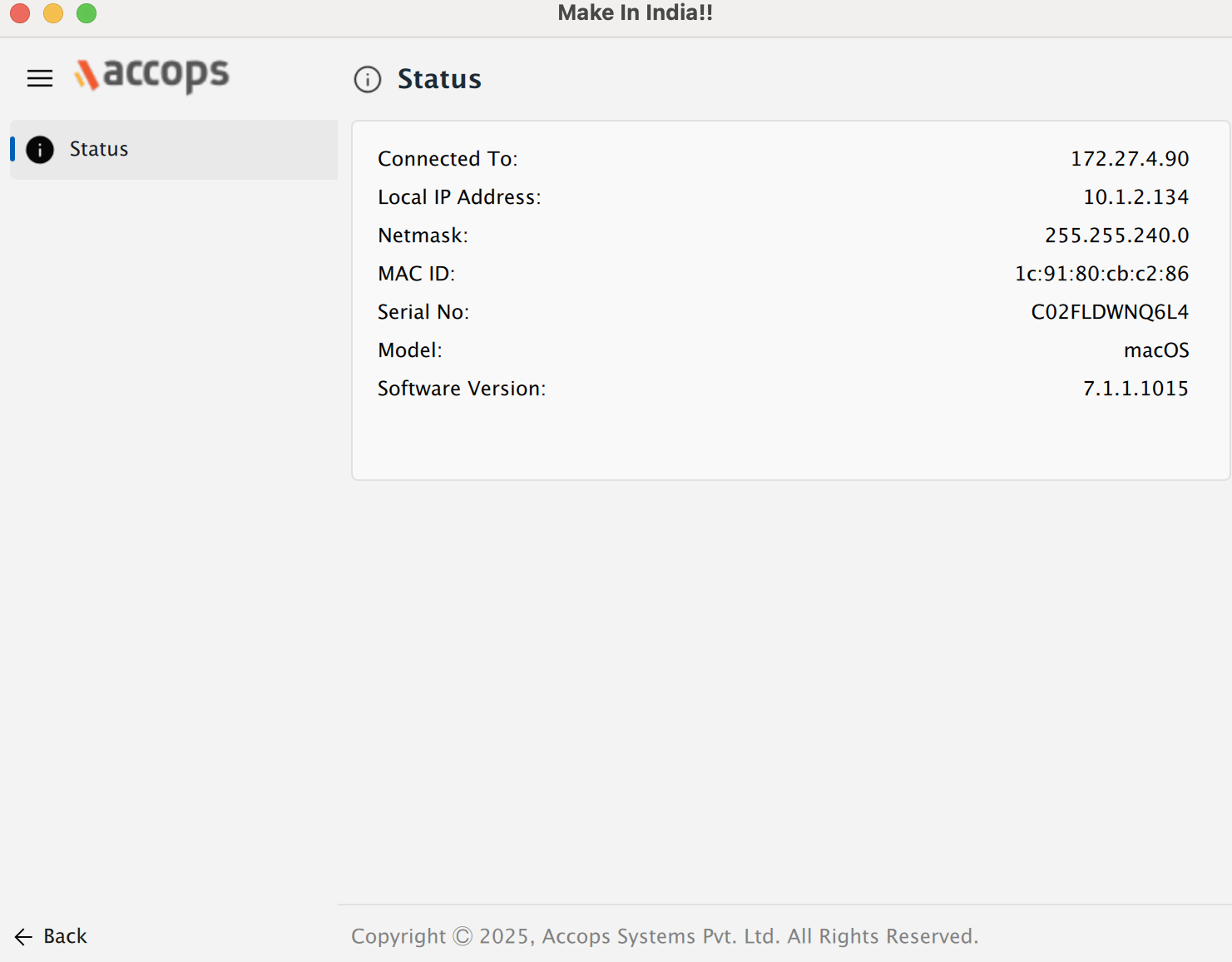
Info Button: Click the Info button to view the client information screen:
a. Connected To: Currently connected HyWorks Controller/ Gateway address.
b. Local Address/Netmask: IP Address and Netmask of the network.
c. MAC ID: MAC ID of client machine.
d. Serial Number: Device/ Machine serial number.
e. Model: Client model, possible value: macOS.
f. Software Version: Version of Workspace Client.